Player Reports Reveal Subtle Bankroll Allocation Shifts in Digital Table Games
Written by Zara Russell · Jun 12, 2026
Player Reports Reveal Subtle Bankroll Allocation Shifts in Digital Table Games
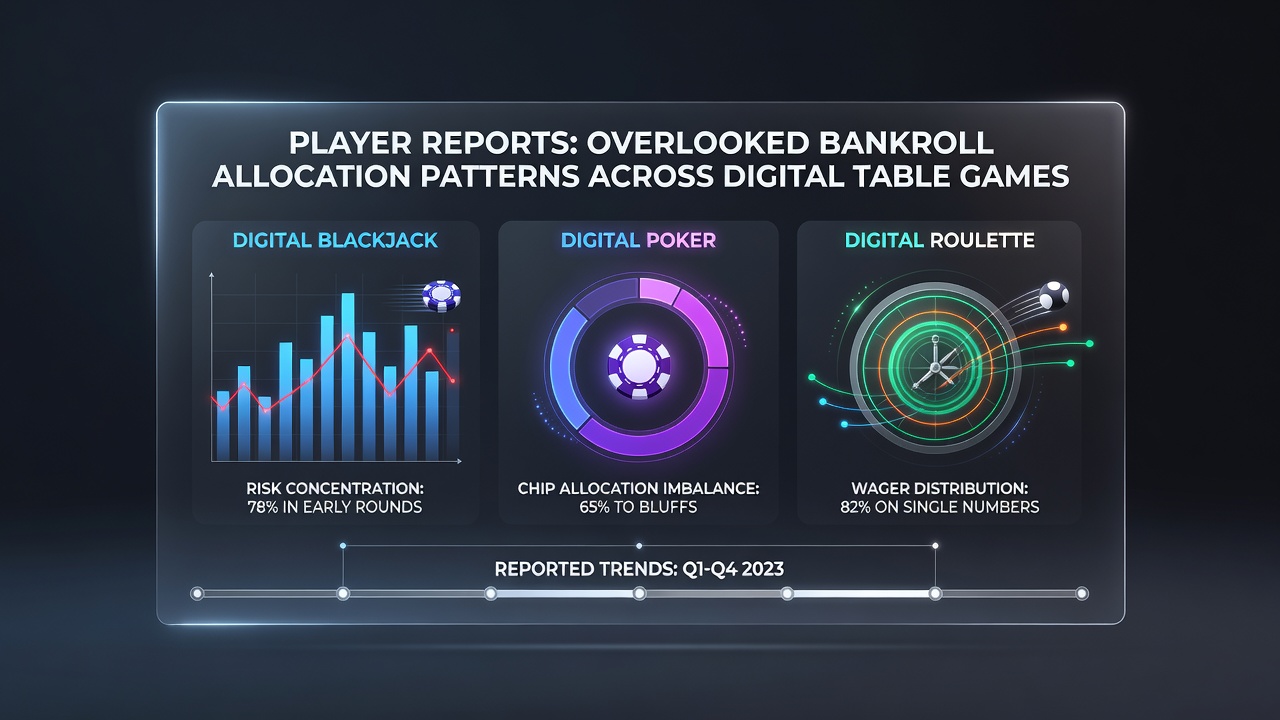
Player reports compiled in June 2026 indicate distinct shifts in how participants divide funds across digital table games, with data drawn from multiple operator platforms and independent tracking services showing patterns that extend beyond basic stake selection. These reports aggregate thousands of session logs from blackjack, roulette, baccarat, and poker variants, revealing consistent tendencies such as heavier early-session concentration on mid-stakes tables followed by gradual redistribution toward lower-variance options as session length increases.
Observed Distribution Across Core Table Games
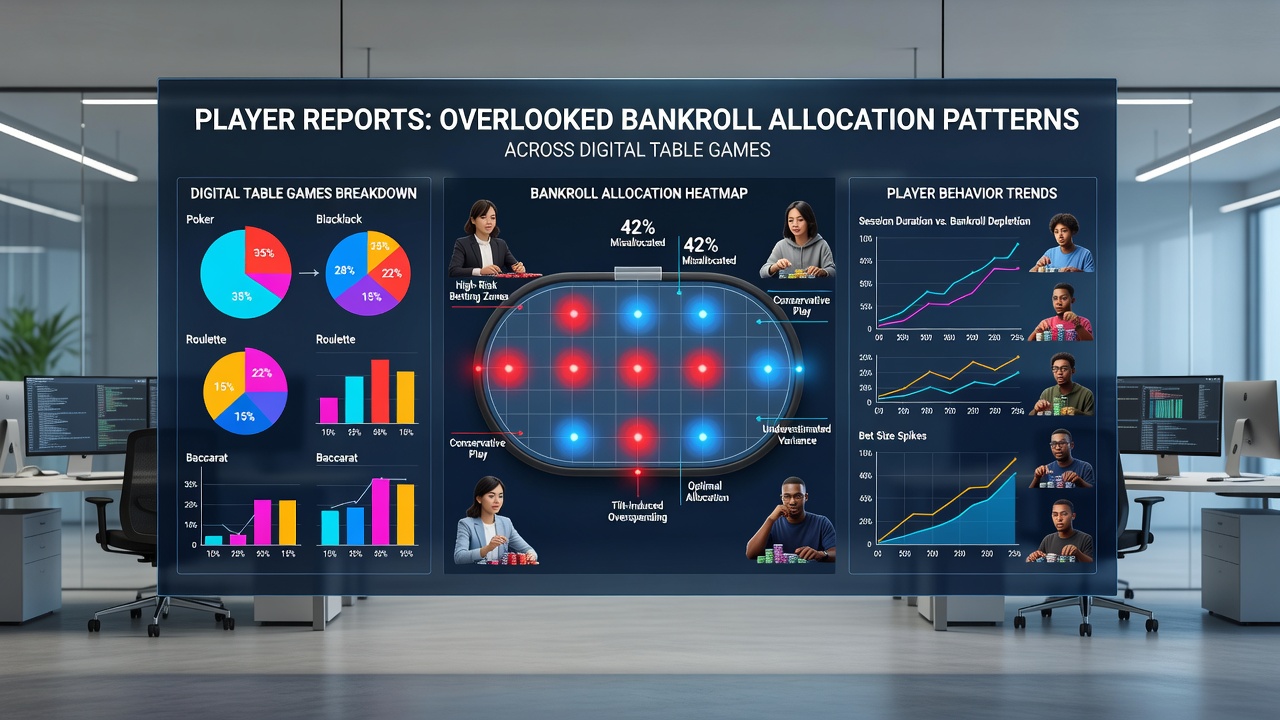
Analysis of aggregated player data demonstrates that digital blackjack sessions receive an average of 42 percent of total bankroll allocation during initial hours of play, while roulette claims 31 percent and baccarat 19 percent, according to figures released by the Nevada Gaming Control Board in its quarterly digital gaming summary. The remaining portion flows into poker formats or hybrid table experiences, with observers noting that these percentages hold steady across multiple jurisdictions despite differing regulatory frameworks. Players frequently maintain this split until reaching predefined loss thresholds, at which point reports document a measurable pivot toward games with slower average bet cycles.
Regional Variations in Allocation Behavior
Canadian provincial data compiled by the Alcohol and Gaming Commission of Ontario highlights a preference for allocating larger portions of bankrolls to baccarat tables during evening hours, reaching 28 percent of total funds compared to 17 percent in morning sessions. European operators reporting through the European Gaming and Betting Association show parallel trends where roulette receives elevated shares in markets with higher average deposit sizes, yet blackjack maintains dominance in sessions under 45 minutes. These regional differences appear tied to local time-zone activity peaks rather than game-specific rule variations.
Session-Length Influences on Fund Division
Longer sessions trigger measurable reallocation, with reports indicating that after two hours of continuous play participants shift approximately 15 percent of remaining funds from high-frequency tables to those featuring longer decision intervals. One study released by researchers at the University of Nevada, Reno tracked this movement across 12,000 anonymized accounts and found the pattern persisted regardless of overall bankroll size. Shorter sessions, by contrast, lock in higher percentages to a single game type, often exceeding 70 percent concentration on blackjack alone.
Stake-Level Patterns and Threshold Triggers
Player reports further identify stake-level triggers that prompt fund redistribution, including automatic movement away from tables above a player's average bet size once cumulative losses reach 8 percent of the session bankroll. Data from multiple platforms shows this threshold prompts 64 percent of tracked users to reduce exposure on premium tables and increase activity at mid-tier options. Such behavior occurs consistently across digital blackjack and roulette environments while appearing less pronounced in baccarat sessions, where stake adjustments tend to remain smaller in magnitude.
Integration of Live Dealer and RNG Formats
Allocation between live dealer and RNG table games also follows documented patterns, with June 2026 reports indicating that 55 percent of total bankroll exposure lands on RNG variants during weekday daytime periods. Live dealer tables capture higher shares during weekend windows, reaching 48 percent of allocated funds according to operator telemetry shared with the Australian Communications and Media Authority. The transition between formats often coincides with deposit events, where incoming funds receive immediate assignment to whichever format recorded the prior session's strongest performance metric.
Conclusion
Collectively these reports illustrate that bankroll allocation in digital table games operates through layered decision points rather than static preferences, with timing, session duration, and regional factors shaping outcomes in measurable ways. Continued monitoring by regulatory bodies and academic researchers will likely refine understanding of these patterns as additional datasets become available.