Provincial Regulations Drive Variations in Craps Payout Structures Across Gaming Regions
Written by Uma Schulz · Aug 26, 2026

Provincial Regulations Drive Variations in Craps Payout Structures Across Gaming Regions
Provincial gaming authorities across Canada maintain distinct oversight frameworks that directly shape how craps operators calculate and display payout structures, creating measurable differences between jurisdictions even when core game rules remain consistent. These variations emerge from licensing conditions, house edge caps, and permitted betting options that each province enforces through its own regulatory body, leading operators to adjust odds and minimum wagers accordingly.
Ontario's Approach to Payout Standardization
Ontario's Alcohol and Gaming Commission sets explicit parameters around proposition bets and odds payouts, requiring casinos to publish maximum house edges for each wager type before approving floor plans. Data from the province's 2025 annual gaming report shows that operators must limit certain hardway bets to 7-to-1 payouts rather than higher ratios permitted elsewhere, which stems from consumer protection rules introduced to curb excessive volatility on the tables. This requirement forces casinos in cities like Toronto and Ottawa to recalibrate their craps layouts every fiscal quarter when new compliance audits occur.
British Columbia's Flexible Structure
British Columbia Lottery Corporation allows operators greater latitude in setting field bet and place bet payouts, provided overall return-to-player percentages stay above thresholds outlined in the provincial gaming control act. Facilities in Vancouver and surrounding areas often post 2-to-1 payouts on certain field wagers that neighboring provinces restrict to even money, reflecting a regulatory philosophy that emphasizes operator discretion within broad fairness guidelines. Recent adjustments effective in August 2026 further clarified how these ratios must appear on digital displays, ensuring players receive real-time updates without altering the underlying mathematical structure.
Alberta and Saskatchewan Comparisons
Alberta Gaming, Liquor and Cannabis applies stricter minimum bet requirements tied to payout calculations, which indirectly influences how craps tables structure their odds ladders compared to Saskatchewan's more permissive framework. Researchers at the University of Calgary's gaming policy center documented these differences in a 2025 study, noting that Alberta tables average lower maximum odds multiples because regulations cap total exposure per player per roll. Saskatchewan's approach, by contrast, permits higher multiples on pass line odds when venues demonstrate compliance through quarterly reporting to the Saskatchewan Liquor and Gaming Authority.
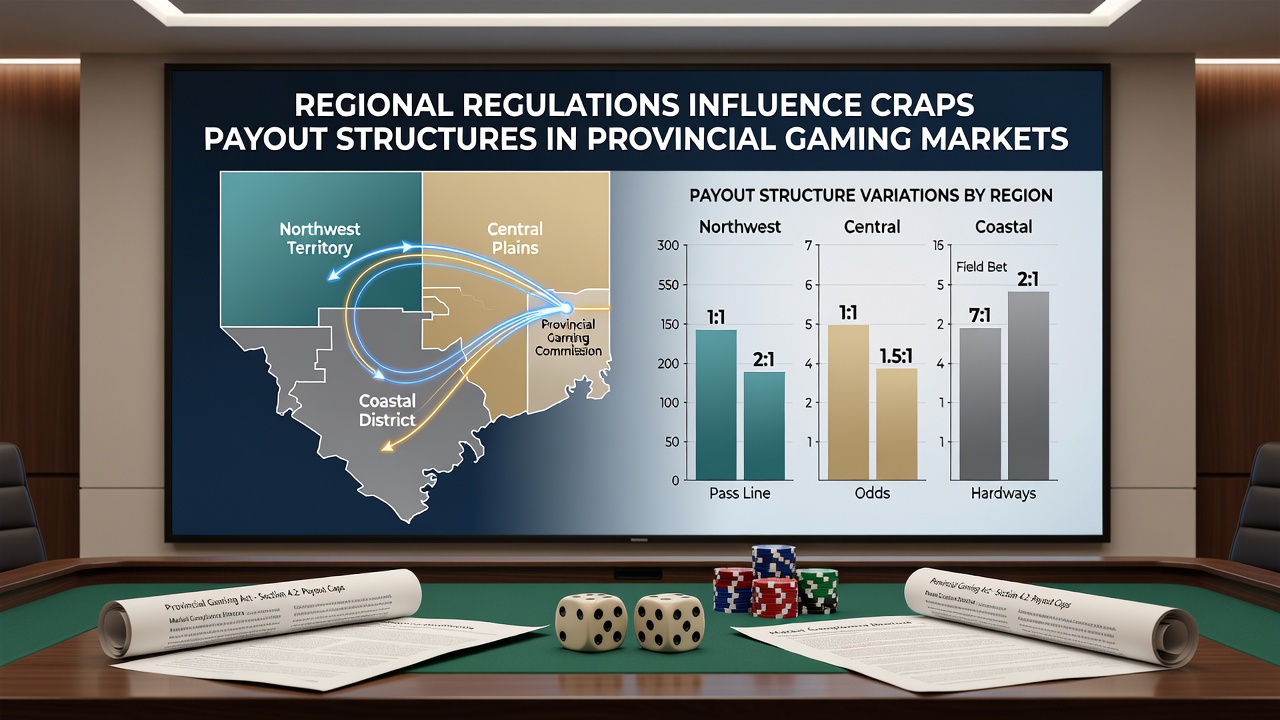
Industry data compiled by the Canadian Gaming Association reveals that these provincial distinctions produce payout spreads of up to 1.8 percent across otherwise identical craps variants, with operators adapting by offering region-specific promotions that offset regulatory constraints. One study released by the association in early 2026 tracked player behavior across three provinces and found measurable shifts in betting patterns when tables crossed provincial lines, particularly around come and don't come wagers.
Impact on Operator Compliance Costs
Operators face increased compliance costs when expanding across provincial boundaries because each jurisdiction demands separate payout certification processes and ongoing monitoring. Figures from the association's quarterly bulletin indicate that multi-province operators spent an average of 12 percent more on legal and technical reviews in 2025 than single-jurisdiction venues, primarily due to the need to maintain distinct odds tables and signage for each market. These expenses ultimately influence which betting options receive prominent placement on the felt.
Emerging Trends in 2026
August 2026 brought updated reporting mandates in several provinces that require real-time transmission of payout data to central regulatory databases, enabling faster identification of discrepancies between advertised and actual returns. This shift builds on earlier pilot programs and has prompted software providers to develop standardized modules that accommodate multiple provincial rule sets within a single platform. Observers note that these technical requirements are accelerating consolidation among smaller operators who lack resources for parallel compliance systems.
Conclusion
Provincial regulatory differences continue to produce distinct craps payout environments across Canadian gaming markets, with each jurisdiction balancing consumer safeguards against operator flexibility through tailored rules on odds multiples, house edge limits, and display standards. Data from regulatory filings and industry reports demonstrate that these frameworks evolve incrementally, often in response to technological changes and cross-border competition. Operators must therefore maintain jurisdiction-specific configurations even as national trends toward digital integration push for greater uniformity in reporting and verification processes.